Summary
Learn how to write a brief for a business tool that actually gets used. A simple three question framework before you build anything.
How to write a brief for a tool your business actually needs


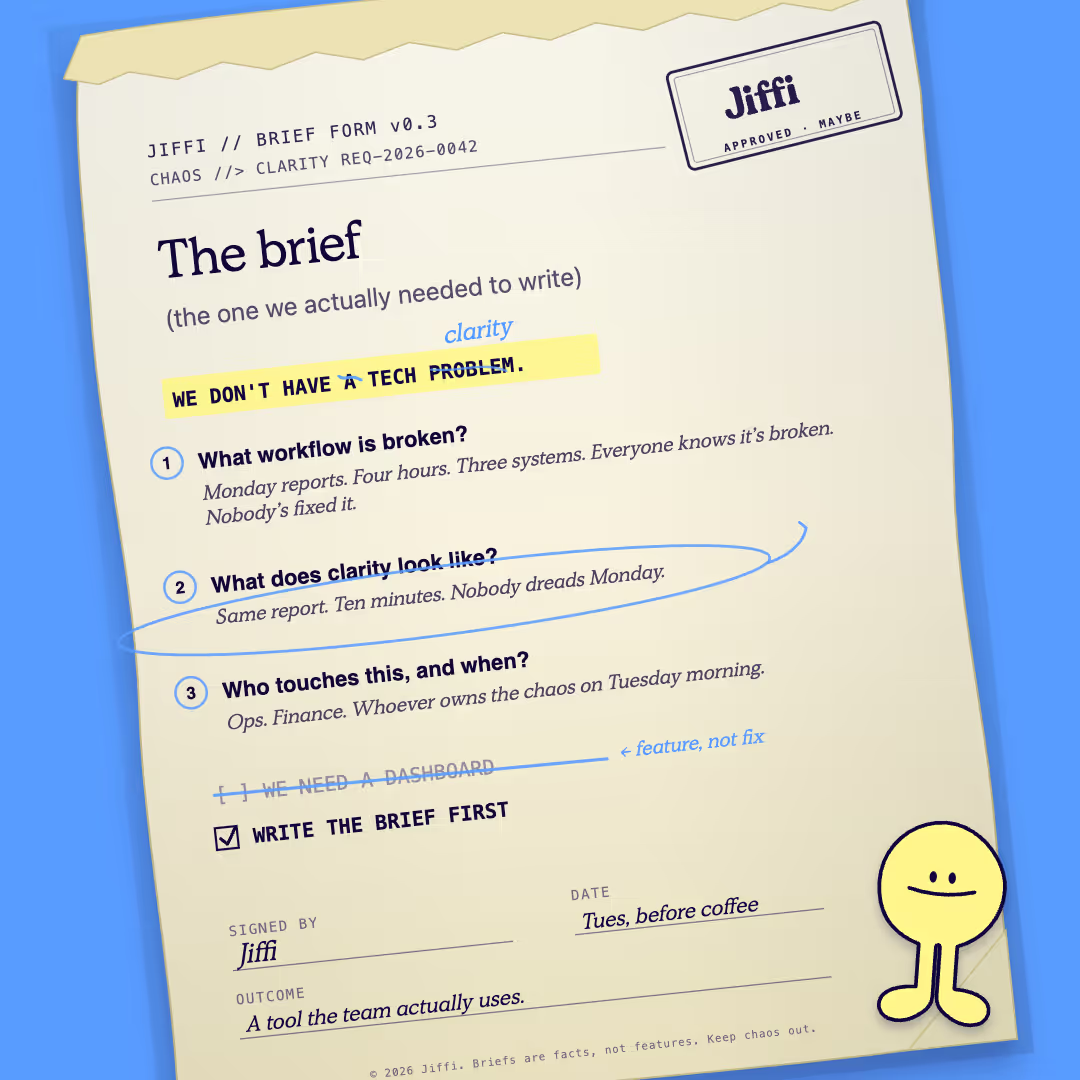
Most businesses don't have a tech problem, they have a clarity problem.
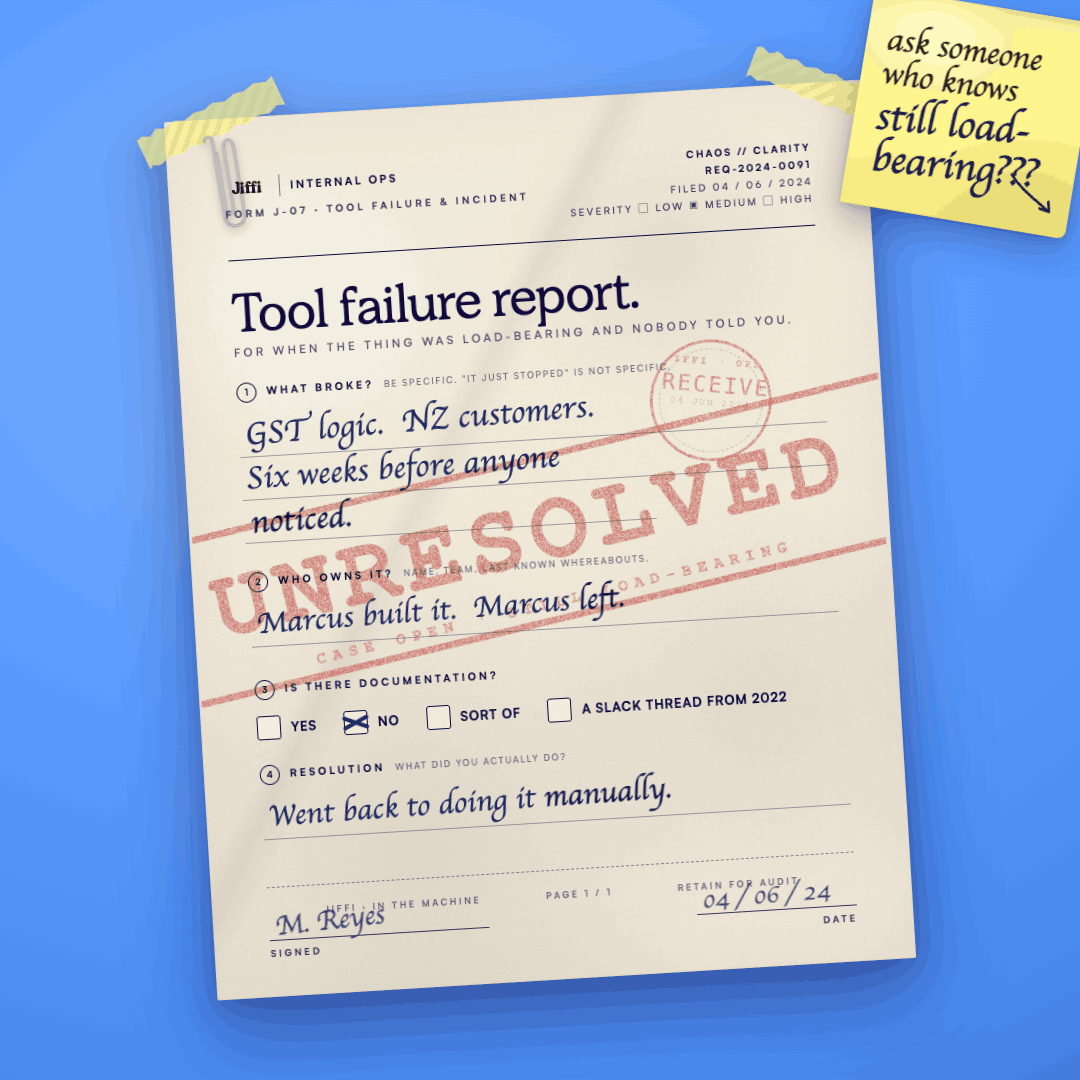
We see it constantly. A founder knows something is broken. They can feel it. The team is spending too long on something that should be simple. Data lives in three places. Nobody trusts the numbers. There is a workflow that makes everyone quietly furious.
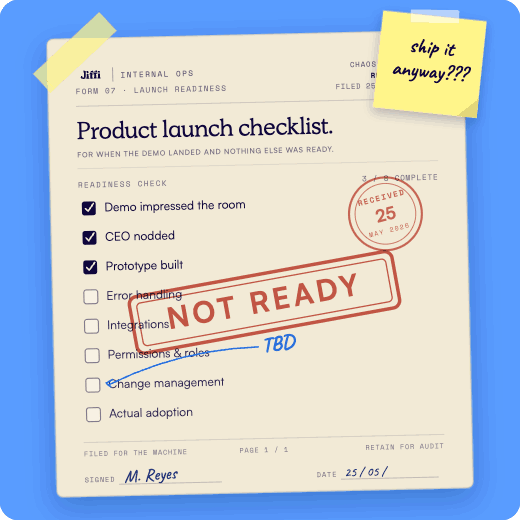
So they jump to the solution. "We need a dashboard." "We need an app." "We need to automate this."
And then they go looking for someone to build it. Or they try to build it themselves. And what comes out the other end almost works. Or worse, nobody uses it.
The problem is rarely the build. The problem is what happened before the build. Or more accurately, what didn't happen.
They never wrote a proper brief.
Why most briefs fail
The most common mistake we see is people describing the tool they want instead of the problem they need solved.
"We need a dashboard" is not a brief. "Our team spends four hours every Monday manually pulling data from three systems to figure out who is working where" is the start of one.
If you can describe the pain in specific, human, time-bound terms, you are already ahead of 90% of briefs. The more precisely you can describe what Tuesday afternoon actually looks like for the person dealing with this problem, the better your brief will be.
Features are opinions. Problems are facts. Start with the facts.
The three questions every brief should answer
You don't need a 20-page requirements document. You need honest answers to three questions.
- What is the workflow that is broken?
Not "we need better reporting." The actual steps. Who does what, when, using which tools, and where does it fall apart? If you can walk someone through the process like you are showing them over your shoulder, you have got this one covered.
- What does fixed look like?
This is where most people get stuck. They describe features instead of outcomes. "A dashboard with filters" is a feature. "The team gets the Monday report in ten minutes instead of four hours" is an outcome. Outcomes are measurable. Features are negotiable. Define the outcome first and the right features will follow.
- Who touches this and when?
Every tool lives inside a workflow, not next to it. Map the people involved, how often they interact with it, and what triggers the process. This is where briefs quietly fall apart because people forget that tools are only as good as the workflow they sit inside.
The brief is the product
Here is the part most people miss.
AI has made building faster than ever. You can go from idea to prototype in a weekend. But that same speed means you can build the wrong thing faster than ever, too.
A tight brief protects your time, your money, and your team's trust in the process. It is not a formality you rush through to get to the exciting part. It is the exciting part. The clarity you build in the brief is what separates a tool that transforms a workflow from a tool that collects dust.
We learned this the hard way working inside dozens of businesses. The projects that succeeded were never the ones with the biggest budgets or the fanciest tech. They were the ones where the problem was properly defined before anyone started building.
Try it yourself
Pick the one workflow that frustrates you most. The one your team complains about. The one you keep saying you will fix next quarter.
Write down the answers to those three questions. Be specific. Be honest about what "fixed" actually looks like.
See how far you get. You might surprise yourself.
And if you want to pressure-test it with someone who has done this a few hundred times, we are right here.
Try Jiffi Build at ai.jiffi.co or book a call with the team and we can help you get started.
Latest articles

 Published Jul 14, 2026
The hidden cost of manual admin in allied health businesses