See the whole picture. Not just the problem you came in with.
Most businesses come to us about one problem. The workshop looks at everything around it: every system you run, how they connect, and where your team works around them. You leave with a written plan for what to change and in what order, yours to use with us or without us.


Half day $5,000 + GST. Full day $10,000 + GST. Go on to a retainer with us and you get the fee back.

Every operator here came through a workshop.











What Gelato Messina says about it.
The video could not load.
Open videoRead what Michael says
I would say if any business is considering working with Jiffi, they have a really great way to introduce the company to you, and that is they come in and they have a session with you, and you just try it. And I think there's nothing to lose in taking that initial session, that exploration session. It might cost you a little bit of money, but even if you don't end up using Jiffi, you walk away with so much valuable data and so many places in your business that you could work on. But I think it will become immediately apparent that you will need Jiffi's help to fix those holes, because most companies aren't built, especially in our industry, to fix all of those issues by themselves.
“Even if you don't end up using Jiffi [to carry out the work], you walk away with so much valuable data and so many places in your business that you could work on.”
Who it's for.

Tick anything that sounds like your business.
Two or more sound familiar? That's what the workshop is for. Book a Clarity Call
Already have a plan and just need it built, or one thing fixed today? Skip the workshop. Book a Clarity Call and we'll quote it directly.
What you leave with.
A written plan: the problems you told us about, what we found, and the steps to fix them, in order. After a full day it usually runs to 30 to 50 pages.
How it runs.

Before the day
We start with where you want the business to be: what it looks like, and how it should feel to run day to day. Then we work backwards from there. Your leadership team fills in a short questionnaire on what they see as the problems. We look at your systems and how they connect, and talk to the people who use them. Jake drafts a plan before we arrive.

On the day
We sit down with your decision makers at your business. On a full day we go through how the whole business runs: every system and every manual workaround. On a half day we focus on one or two problems. Either way, Jake tests the draft plan against what you tell us and finds the holes in it.

After the day
We write it up and send it to you. The plan is yours to keep.
Who's in the room.
From Jiffi
Jake Shelley leads it, with the engineers and specialists who know your kind of systems: rostering and payroll, POS, accounting, automation and custom software.
From your business
The people who make the decisions and the people who run the day to day. Usually the owner, whoever runs operations, and whoever looks after payroll or your systems.
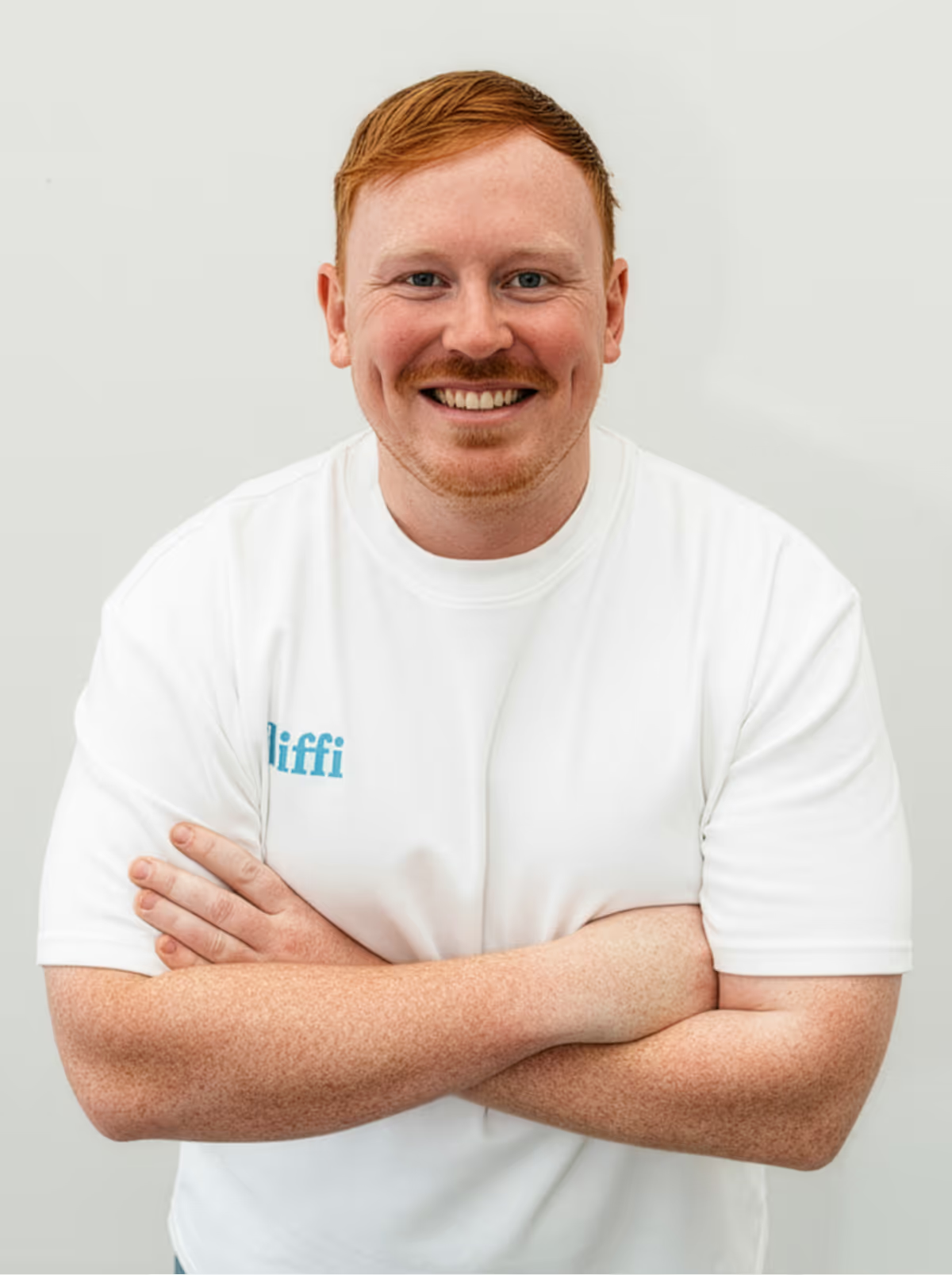
Jake Shelley
Managing Director and Co-founder
An early Deputy employee, from Junior Developer to Senior Director of Global Delivery and Professional Services.
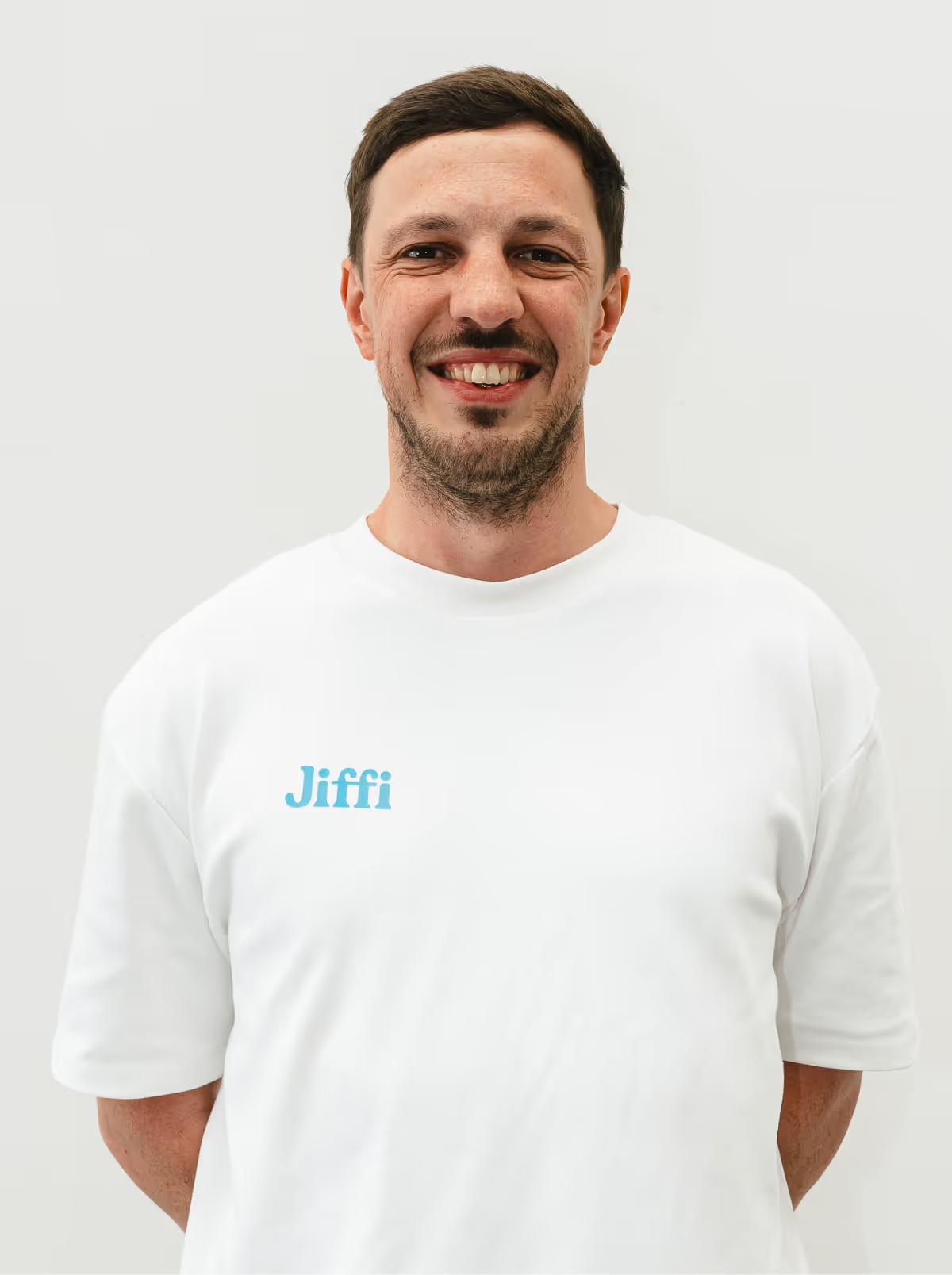
Joseph Pons
Head of Engineering and Co-founder
Over seven years at Deputy, finishing as Engineering Manager for CS Engineering and Product Integrations.

Adrian Abdipranoto
Head of Product
Nearly six years at Deputy, from APAC Customer Implementation Consultant Manager to Senior Product Manager.
Dan Miller
Head of Delivery
Five years at Deputy in senior consulting roles, and eight across Deputy, Humanforce and Dayforce.

Paige Hinson
Head of Brand and Communications
More than 11 years in brand and communications, across leading Australian agencies and her own consultancy.
What it costs.
Half day
$5,000+ GST
We focus on one or two simpler problems. You still leave with the written plan.
Full day
$10,000+ GST
We go through the entire business, so the plan goes much deeper.
Go on to a retainer with us and you get the fee back.
Not sure which? We'll tell you on a Clarity Call. You'll know the price before you commit to anything.
After the workshop.

Three ways forward, and the plan works for all of them. Most of our longest-running clients started here.
We build it with you
A project to fix the urgent things first, then a retainer for as long as you want one. Go on to a retainer and the workshop fee comes back to you.
Someone else builds it
The plan is yours. Hand it to your own team or to another provider, and it still works.
You do it yourselves
Plenty of it won't need us: settings to change, tools to drop, steps to train your team on.
Clarity Club opens up the systems, sessions and tools our team uses.

What we've done for operators.
Gelato Messina
“So many tasks now that we used to do manually, in every department.”
Marketing, production and operations, across close to 40 stores.
Enviz
A record sales month of around $200,000.
And over $1 million added to the sales pipeline in three months.
Fleet Healthcare
Invoicing went from minutes per invoice to seconds.
And a two-week invoicing backlog was cleared.
Questions.

Is this a sales pitch?
Do we have to build it with you?
Who needs to be there?
What do we need to prepare?
Which systems does it cover?
Do we need to be technical?
Where does it happen?
Half day or full day?
What about our data and security?
What does an operational efficiency consultant do?
What are the key areas of operational efficiency?
How do you identify bottlenecks in a business?
What's the difference between operational efficiency and business strategy?
How do you run a process improvement workshop?
Start with a Clarity Call.